


In addition, his work is quite distinct both in aims and technique, and in its deeply humanitarian symbolism where a solitary figure is often depicted emerging from a smog of pollution or a monster opens its mouth to devour an innocent bird.
Theo’s steadfast dislike of the commercial side of painting meant he never really got the recognition his art warranted. In later life, he even seemed to court unpopularity – the fearful mood captured in his large paintings of skeletons and works like ‘The Crucifixion of Mankind’ were too dark to appeal to a public over whose collective mind the war still cast a dark shadow.
A humble rebel
Theodore Major 1908-1999
“The very last thing you should do when you are painting is to express yourself. You be completely and utterly humble, no matter what the subject matter.”
Theodore Major, Lancashire Evening Post and Chronicle, 1964
Theo was also extremely hard to deal with, and would not promote his work. This extended to even refusing to sell a painting to the Tate Gallery or any private collectors – according to his daughter Mary, he abhorred art bought as an investment, decoration or status symbol, and exhibitions as ‘ego traps' for painters striving only for fame and money.

Crucifixion, Wigan
Visitors to the makeshift studio and gallery attached to his house could see his paintings for free. Asked if he would sell some of his works to pay the council tax owing on the property, he replied, “Not to the people who want to buy them, the rich people. I painted these pictures for ordinary people to come and see, and they do come.”
Theodore Major painted powerful works with an undiminishing intensity but he discouraged an audience, became reclusive, exhibited rarely and, as Lawrence P Clearly says in his book on Major, “…thus consciously or unconsciously ensured his obscurity.”
However, his overriding aim to reach the essence of his subject by stripping away all unnecessary detail has undoubtedly played a huge role in advancing northern art and artists, which until relatively recently were largely ignored.
A rebel. A visionary. A difficult man. An adoring father and husband. And now finally, recognition for an artist considered by many to be Britain’s last forgotten twentieth-century master.

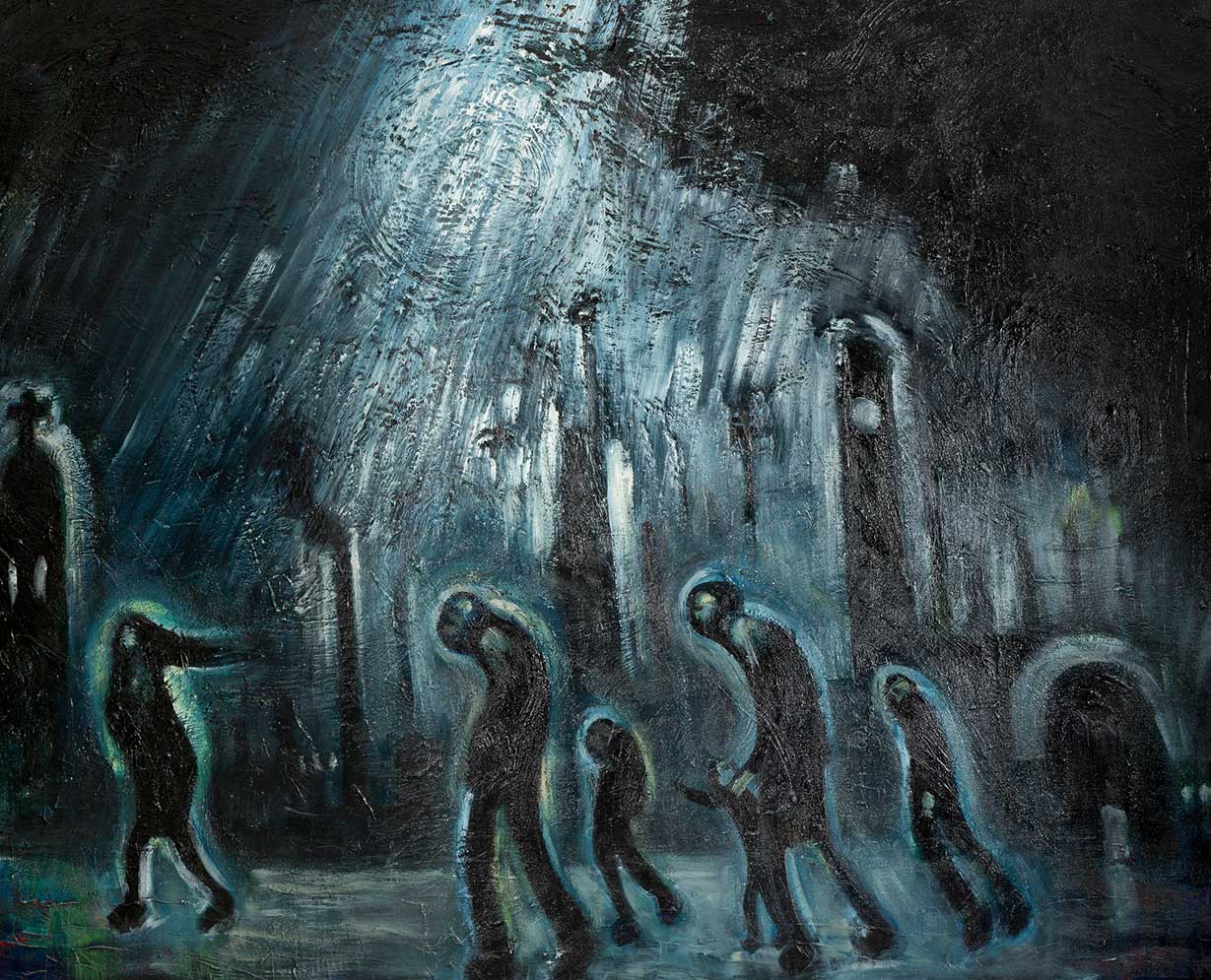


“I painted a man crucified on a telegraph pole and all the little people underneath, no one taking any notice.”